In the world of entrepreneurship, few stories capture the essence of grit, innovation, and sheer determination like Daymond John’s. As the founder of FUBU, a brand that revolutionized urban fashion, and a beloved investor on ABC’s Shark Tank, Daymond has become a beacon for aspiring business owners everywhere. His path from the streets of Queens, New York, to amassing a net worth of approximately $350 million in 2026 is nothing short of legendary. But what makes his tale even more compelling is the personal hurdles he’s overcome—dyslexia, financial rejections, and even cancer—all while building an empire that inspires millions.
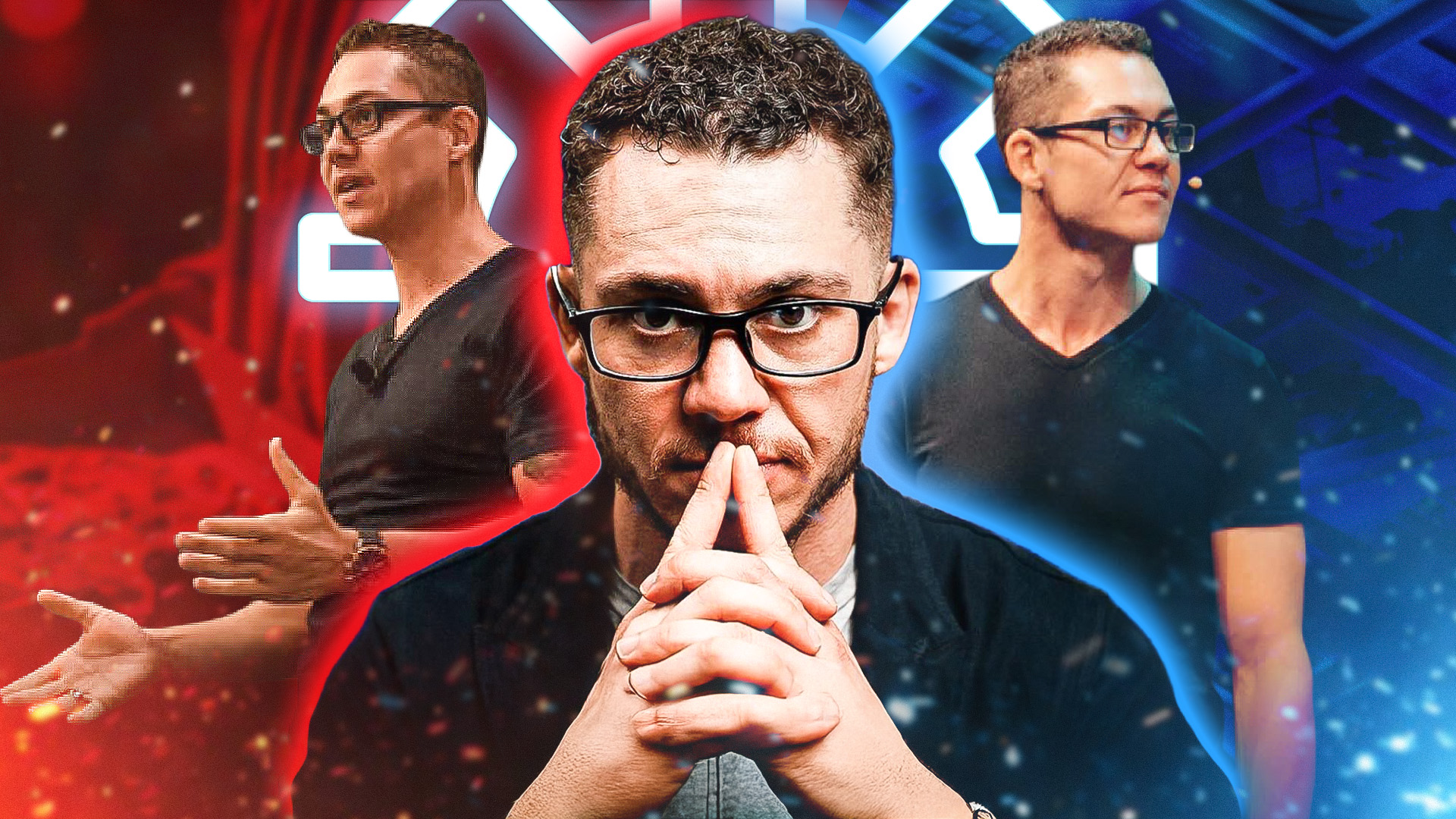
Recently, on Inside Success TV, host Rudy Mawer sat down with Daymond for an unfiltered conversation that peeled back the layers of his success. Rudy, known for his own entrepreneurial prowess in digital marketing and e-commerce, brought a relatable energy to the interview, probing Daymond on everything from his early hustles to his Shark Tank strategies. As someone who’s followed Daymond’s career closely, watching this exchange felt like a masterclass in resilience. Rudy’s questions weren’t just surface-level; they delved into the raw emotions behind the wins, making it clear why Daymond calls himself “The People’s Shark.” If you haven’t streamed the episode yet, it’s a must-watch for anyone chasing their own American Dream.
Early Life: Roots in Queens and the Spark of Entrepreneurship
Daymond John was born on 02/23/1969 in Brooklyn, New York. He spent most of his childhood in Hollis, Queens. This neighborhood is where Run-D.M.C. and LL Cool J came from. Life was not easy for John. He had to grow up quickly because his parents split when he was just 10. He started helping his family by taking odd jobs. He had to learn the value of doing hard work. He was a paperboy and also worked at a diner. He was a very active kid.
It is not well known that in John’s case, the so-called “disability” was actually a major factor in his success. Dyslexia is a learning disability that involves difficulty in reading due to problems identifying speech sounds and learning how they relate to letters and words. John was very open that this disability was a major factor in his schooling. Instead of this stopping him, it helped him put his focus on learning other things, like math and other activities. He had to learn how to work his way around problems. “Dyslexia forced me to think differently,” he told Rudy Mawer. Mawer has mentored many entrepreneurs and said these so-called “disabilities” double as superpowers in business. Instead of a setback, the situation has the potential for unique innovation.
High school was an important time for Daymond. Through a co-op program, he was able to work full-time while studying. This mix of work and study really sparked his entrepreneurial drive. Daymond had big dreams in his late teens, and when he saw ski hats made of overpriced wool in the early 90s, everything changed.
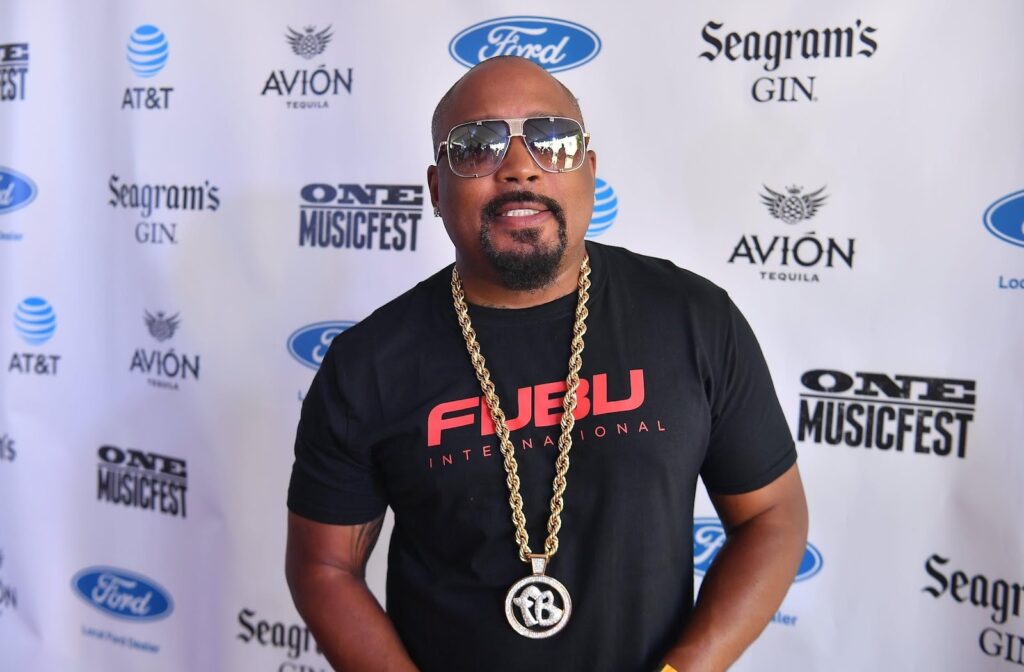
Shark Tank’s investor Daymond John doesn’t believe in big breaks
The Birth of FUBU: A $40 Investment That Built a Billion-Dollar Brand
When Daymond was out on the street making his first sales, he made $800 from 90 hats. In 1992, Daymond made his first hats using his mother’s sewing machine. He sold the hats for $10, $20 less than the other hats. He was using his $40 investment to make hats that cost him only $10 each.
Daymond partnered with his childhood friends, J. Alexander Martin, Keith Perrin, and Carlton Brown, to start selling products under the company name FUBU, which stands for For Us, By Us. They stepped into the gap left by the underrepresentation of hip-hop culture through their apparel products. They embroidered and sold many hockey uniforms and sweatshirts to many hip-hop artists for promotional use.
FUBU’s popularity grew as more people discovered hip-hop culture and adopted its fashion. FUBU’s explosion in popularity was fuelled by the many orders being placed, so many that FUBU had to fulfill a $300,000 order at MAGIC in Las Vegas. FUBU was extremely popular.
But scaling wasn’t easy. Banks turned them down 27 times (yes, twenty-seven!), citing the brand’s urban focus as too risky.
Enter Daymond’s mom, who mortgaged their Queens home to fund production. Still short on cash, they placed a bold ad in The New York Times seeking investors. It worked—Samsung Textiles came on board, providing the distribution muscle needed to go global. By the late ’90s, FUBU was pulling in over $350 million annually, and to date, the brand has generated more than $6 billion in worldwide sales. Today, FUBU’s legacy is enshrined in the Smithsonian’s National Museum of African American History and Culture, a testament to its cultural impact.
In the Rudy Mawer interview, Daymond got emotional recounting this phase. “My mom believed in me when no one else did,” he said, his voice cracking. Rudy, drawing on his own experience building multi-million-dollar businesses, emphasized that family support is often the unsung hero in success stories. It’s these personal anecdotes that make Inside Success TV so addictive—they humanize the hustle.
Overcoming Rejections and Personal Battles
Daymond’s journey wasn’t all smooth sailing. Those 27 bank rejections? They stung, but they taught him resilience. “Rejection is redirection,” he often says, a mantra that resonates deeply in today’s startup world, where funding pitches fail more often than they succeed.
On a personal front, Daymond’s dyslexia continued to challenge him, but he flipped the script by leveraging his strengths in visual thinking and networking. Then, in 2017, came a stage II thyroid cancer diagnosis. After successful surgery, he’s been cancer-free, but the experience shifted his perspective. “Health is wealth,” he told Rudy, who shared his own tips on balancing high-stakes business with self-care. It’s a crucial lesson for entrepreneurs: Burnout is real, and ignoring your well-being can derail even the biggest empires.
Family life has also been a grounding force. Daymond has been married twice—first to an unnamed ex, with whom he shares daughters Destiny and Yasmeen, and then to Heather Taras in 2018, welcoming daughter Minka Jagger. Fatherhood, he says, keeps him humble amid the fame.
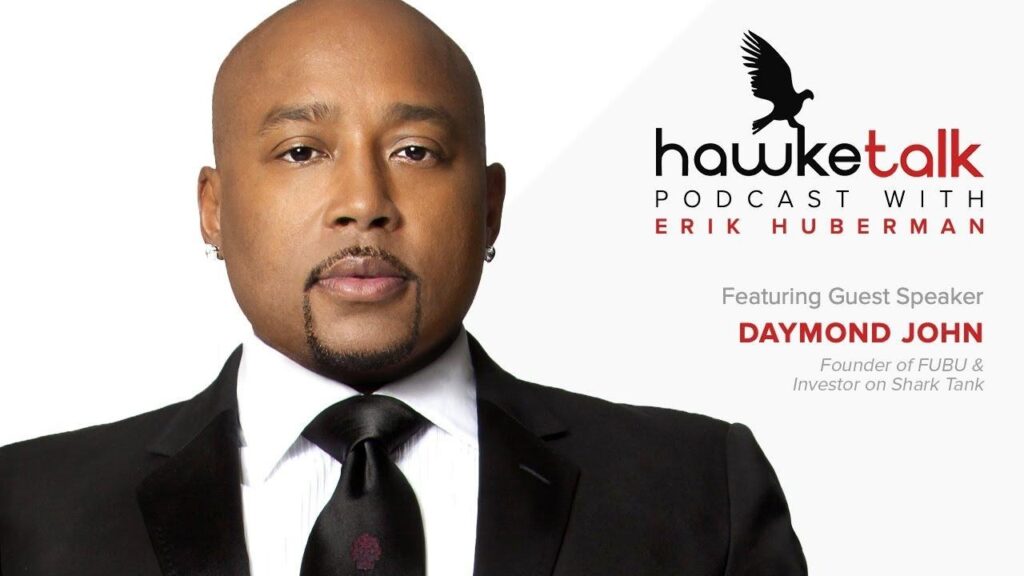
#33 HawkeTalk: Daymond John — Founder of FUBU & Investor on Shark Tank
Shark Tank Stardom: Investing in the Next Generation
In 2009, Mark Burnett, a well-known producer, enlisted Daymond to appear on Shark Tank. Daymond was even a bit hesitant to take the opportunity, given the premise: essentially, watching people pitch businesses for potential investment. Feigning skepticism, he took the opportunity. He began ‘investing’ his own money into the ‘deals’ the other ‘Sharks’ made. By 2026, he estimates that he will have invested over $8.5 million into countless companies.
Even before investing, Daymond believed that he could contribute to the success of Bubba’s-Q Boneless Ribs, Bombas, and countless other companies. Daymond was a Bombas investor. He invested $200,000 for a 17.5% stake in the company. 9 months after investing, Bombas reached $12 million in revenue after selling only $450,000, making them the most successful company to date on Shark Tank.
Daymond has founded a plethora of companies in addition to The Shark Group: Next Level Success (previously called Daymond John’s Success Formula), “Daymond on Demand,” and even partnered with Shopify. He also has bestselling books: “The Power of Broke” and “Rise and Grind,” which outline the importance of running and scaling a business without debt.
While watching his episode, Rudy Mawer questioned Daymond about the criteria he uses to invest. Daymond answered, “I look for passion and a clear path to profitability.” Rudy, who has a stake in e-com ventures himself, said, “It’s about the founder as much as the idea.” The interaction was like listening to two legends reminisce about the good old days. For anyone building a side hustle, this is pure gold.
Lessons from Daymond: A Personal Reflection
Reflecting on Daymond’s story, it’s clear that success isn’t about luck; it’s about action. As Rudy Mawer put it, “Daymond embodies the hustle we all need.” One key takeaway: Embrace your differences. Dyslexia didn’t stop him; it propelled him. Another: Network relentlessly. Getting FUBU into rappers’ hands was grassroots marketing genius.
For modern entrepreneurs, Daymond’s advice on digital branding is spot-on. In 2026, with AI and social media dominating, he stresses authenticity: “Build a community, not just a customer base.” His FUBU ethos—”For Us, By Us”—reminds us that inclusive brands win big.
Personally, Daymond’s resilience hits home. I’ve seen friends battle learning disabilities or funding woes, and his story offers hope. Streaming his interview with Rudy on Inside Success TV reignited my own drive—it’s not just entertainment; it’s empowerment.
The Enduring Legacy: Redefining the American Dream
Daymond John isn’t just a FUBU founder or Shark Tank star; he’s a mentor redefining success for underrepresented communities. With a net worth hovering at $350 million, he’s proof that starting small—with $40 and a dream—can lead to billions. His cancer survival, family focus, and ongoing ventures like The Shark Group show a man who’s evolved beyond business.
FAQs (Frequently Asked Questions)
- What is Daymond John’s net worth?
According to Celebrity Net Worth, Daymond John has an estimated net worth of around US $350 million. His wealth comes from founding the streetwear brand FUBU, investing in startups on Shark Tank, writing bestselling business books, and operating his consulting firm, The Shark Group. FUBU alone has generated more than US $6 billion in lifetime global sales. - Does Daymond John have a disability?
Yes. Daymond John has openly shared that he has dyslexia, which made reading and writing challenging during his school years. He has said this pushed him to develop strengths in math, problem-solving, and creative thinking. He is also a cancer survivor, having undergone successful surgery for stage II thyroid cancer in 2017. - How many times has Daymond John been married?
Daymond John has been married twice. From his first marriage, he has two daughters, Destiny and Yasmeen. In 2018, he married Heather Taras, and the couple welcomed a daughter named Minka. - How much did Daymond John sell FUBU for?
Daymond John never sold FUBU outright. Instead, he grew the company by reinvesting profits and securing manufacturing support from Samsung Textiles after being turned down by multiple banks. At its peak, FUBU generated over US $350 million in annual revenue, and the brand has earned more than US $6 billion overall. John remains closely tied to the brand and its legacy. - What does FUBU stand for?
FUBU stands for “For Us, By Us.” The brand was created to represent and empower young people from urban communities and later became a defining symbol of hip-hop and streetwear culture. - Does Daymond John still own FUBU?
Yes. While FUBU is not as dominant as it once was, Daymond John remains a founding partner and continues to benefit from and promote its legacy. The brand played a major role in launching his career as an investor, mentor, and business leader. - Is Daymond John dyslexic?
Yes. Daymond John has repeatedly spoken about living with dyslexia. He credits learning to work around it—by focusing on numbers, creativity, and big-picture thinking—as a key factor in his entrepreneurial success. - How many children does Daymond John have?
Daymond John has three daughters: Destiny and Yasmeen from his first marriage, and Minka Jagger John with his wife Heather Taras. - How did Daymond John join Shark Tank?
In 2009, television producer Mark Burnett invited Daymond John to become an original investor on ABC’s Shark Tank. Since joining the show, he has invested over US $8.5 million in startups, backing successful brands such as Bombas and Bubba’s-Q Boneless Ribs.
If Daymond’s journey inspires you, check out his books or tune into Shark Tank. Better yet, watch the full Rudy Mawer interview on Inside Success TV for that raw, motivational edge. As Daymond says, “The power of broke” is your greatest asset—use it to build your empire.